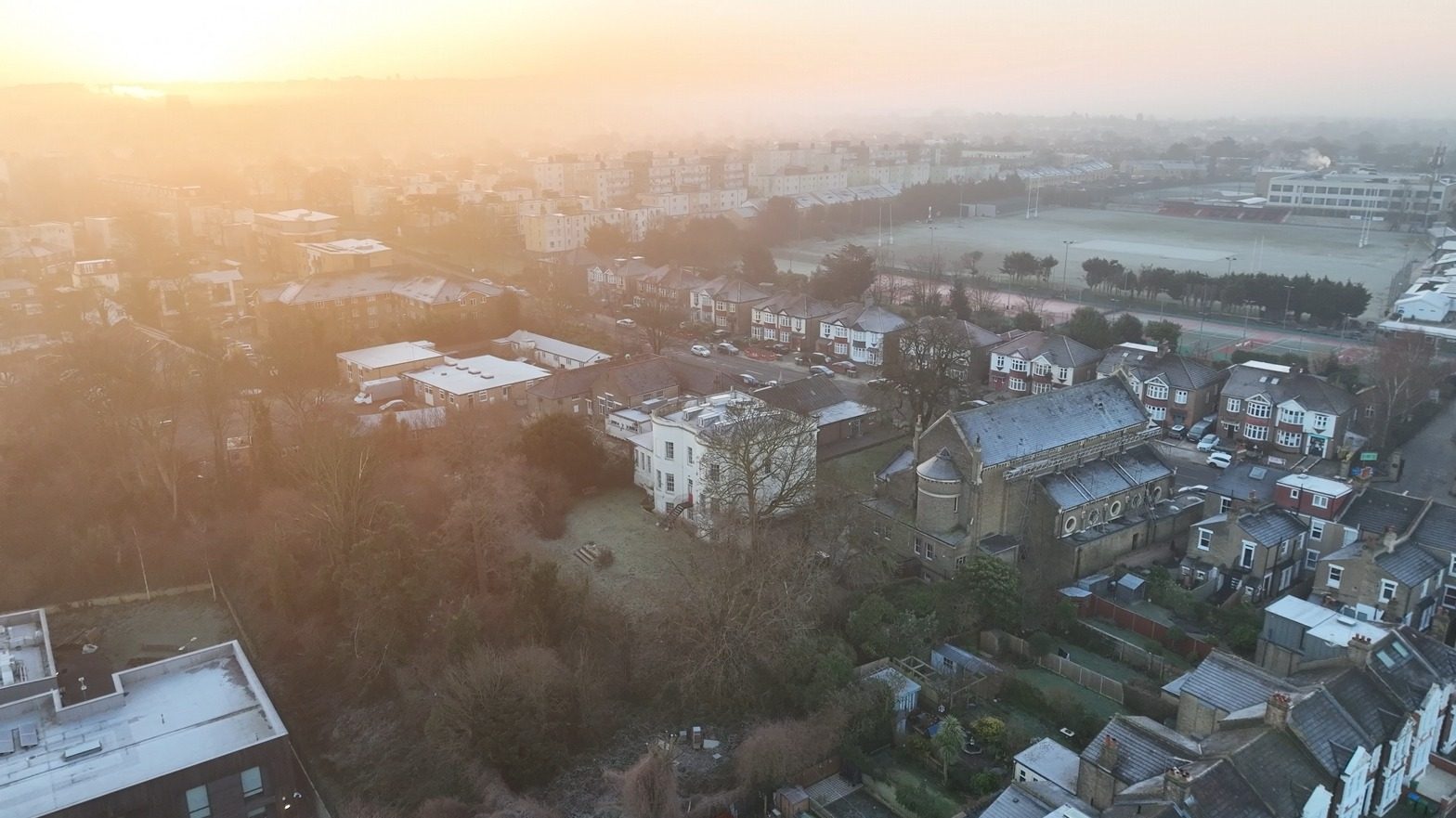
What follows is the parish's own brief history, kept and added to over the years. The full heritage record for the precinct, including the Heritage Statement and Conservation Plan, is maintained by the Our Lady of Grace Parish Buildings Preservation Trust.
A brief history of Our Lady of Grace
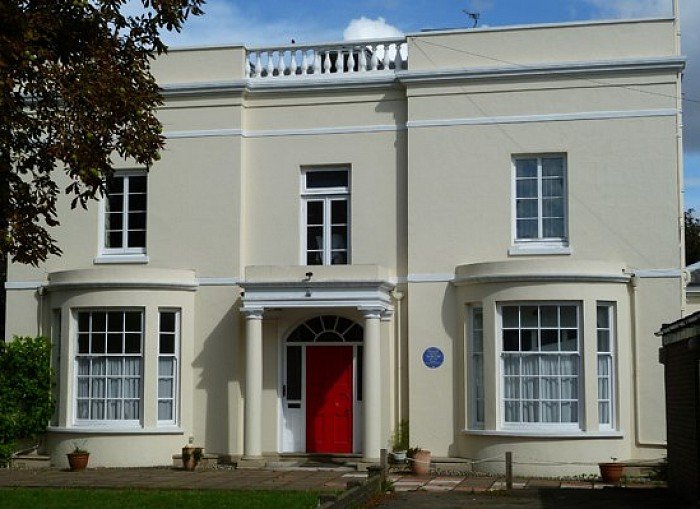
c.1800 — The parish house, originally called Highcombe, was built in the Regency style; it is the sole survivor of several villas of its kind in the area. One of its first residents was Sir William Congreve, head of the Royal Laboratory at Woolwich and a prolific inventor, remembered above all for the Congreve rocket; King George IV visited the house often. A series of residents with links to the Royal Military Academy followed, until the house was bought by William Henry Barlow, the eminent railway engineer who investigated the Tay Bridge disaster, designed its replacement, helped complete Brunel's Clifton Suspension Bridge, and built the great train shed of St Pancras, in its day the largest spanned roof in the world. He collapsed and died in the entrance hall of the house on 12 November 1902, aged 89.
1903 — On 18 July, the Assumptionist Sisters, expelled from Bordeaux by the anti-clerical laws of France, bought the house as a refuge and moved in. Their first act was to set up a small chapel in what is now the parish office; the first Mass was said the following day by Fr Benedict Caron AA, on a temporary altar, with the sisters and five parishioners. Within a few weeks more than a hundred were attending Mass, and it became clear that a church was needed.
1904 — Work began on the church, designed by the French architect Eugène-Jacques Gervais of Bordeaux in the Romanesque style, with a nave and west aisle. Built by Jones and Sons of Erith to hold 400, it cost £5,000.
1905 — The first local girl, Ellen Noon, joined the Sisters. The foundation stone was laid on 27 August by Bishop Amigo of Southwark, and the parish school opened in the conservatory on the ground floor of the house. The foundation stone reads:
O Blessed Virgin Mary, fountain of pardon, Mother of Grace, hope of the world, hear your children, brothers and sisters, called Augustinians of the Assumption, banished from their homeland, but near to you no longer exiles, eagerly desiring a new harvest. Mary, Mother of Grace, they laid the first stone of this building dedicated to you, AD 1905, during the reign of His Holiness Pope Pius X, during the episcopacy of the Most Illustrious Peter Amigo, Bishop of Southwark.
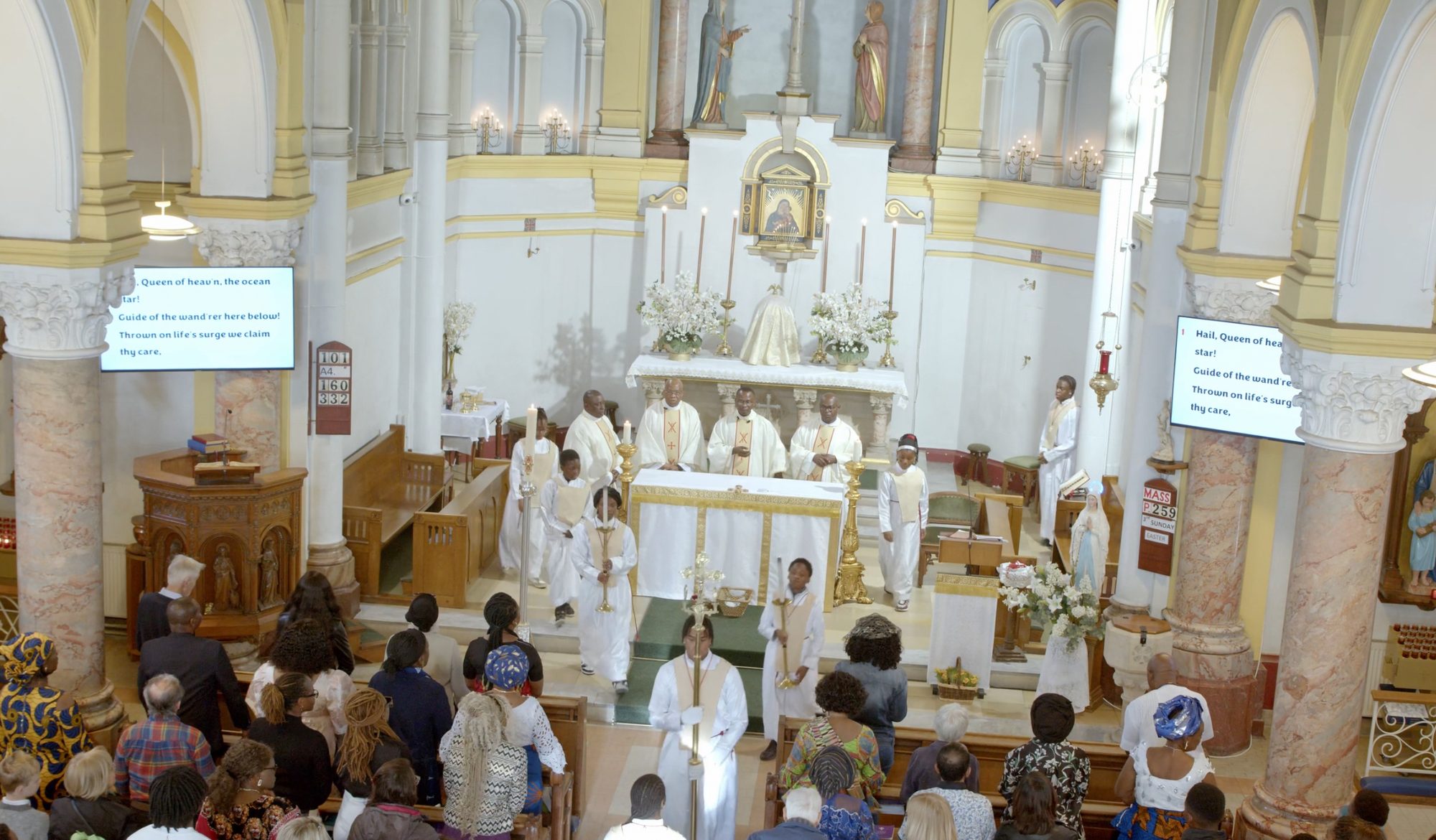
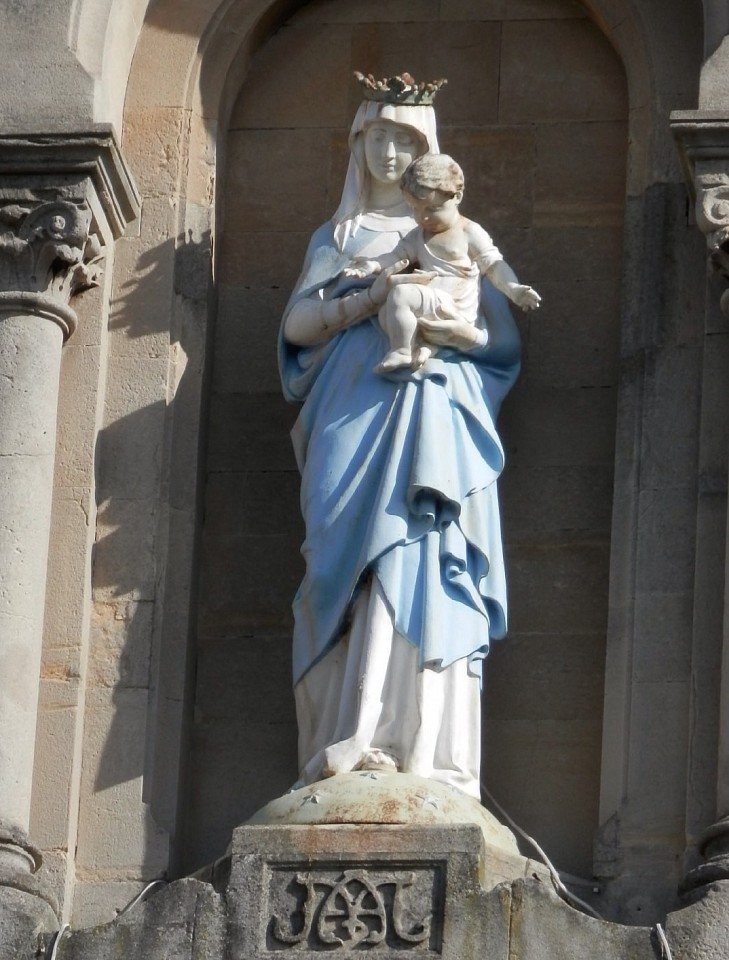
1906 — On 8 September the church was opened and dedicated to Our Lady of Grace, a dedication chosen by the Sisters in memory of a pre-Reformation shrine of that name in the area, of which no trace survives. Bishop Amigo had wanted the church named for St Alphege, martyred by the Danes on Blackheath, but the Sisters' wishes prevailed, as they had provided the funds. One of the Sisters, a trained sculptor, carved a life-size statue of Our Lady in wood and plaster, which stood in the alcove above the high altar until it was moved outside in the early 1960s. In October the Children of Mary Association was formed.
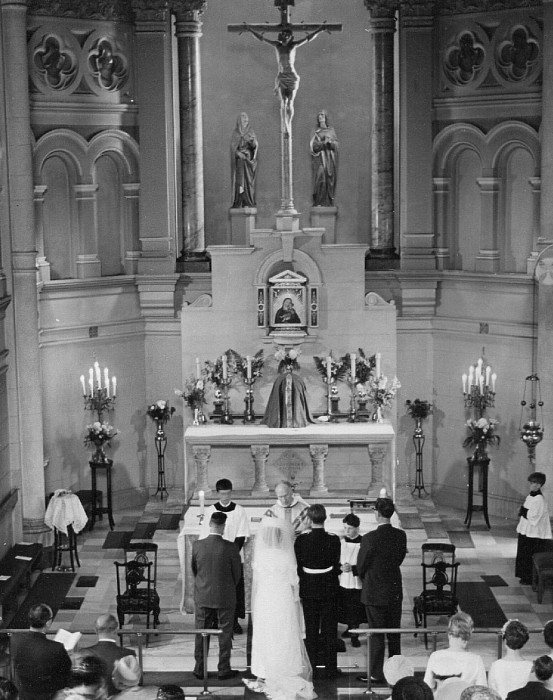
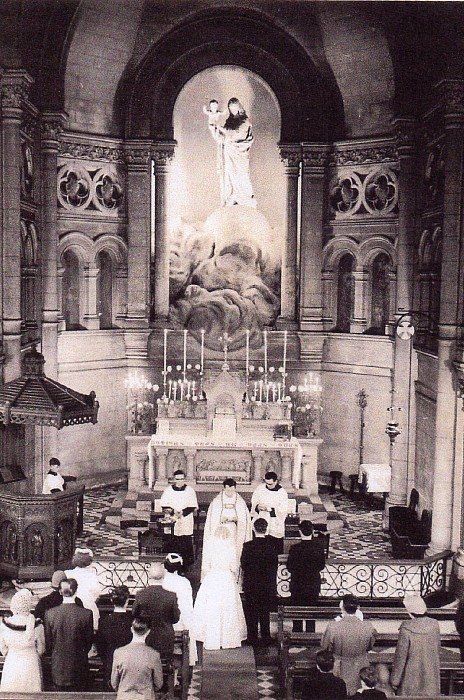
1907 — The Stations of the Cross were installed and the church was registered for marriages. The school expanded into the house and stables.
1912 — The Sisters returned to Bordeaux, and the Assumptionist Fathers bought the property and moved into the house. New Assumptionist Sisters arrived later in the year at 34 Charlton Road, where they founded the Assumption Convent School. Sr Palmyre Clothier, a local convert who had joined the Sisters, was its first headmistress and remained so for thirty-two years.
1914 — Plans for a proper school building east of the house were approved but delayed by the Great War; the school continued in the house. During the war, local residents sheltered from Zeppelin raids in the house cellars.
1922–23 — The parish hall was built by the parishioners themselves, for use as school and parish hall. It remains a greatly valued asset of the parish.
1925–27 — The pulpit and pews were carved by Fr Gregory Chedal AA. A new organ and coke-fired heating were installed. Both altar and pulpit originally carried carved wooden canopies, removed in the early 1960s.
1929 — The new school finally opened on 8 January with 270 pupils. The Sisters also opened a hostel at The Firs, 84 Victoria Road, for young Frenchwomen wishing to learn English.
1937–39 — With war approaching, the RAF bought the Victoria Road convent as a headquarters for the 34th Anti-Aircraft Battalion. The Sisters bought Little Combe, at the corner of Bramhope Lane and Charlton Road, to build a new school, which Archbishop Amigo blessed and opened in March 1939. During the war it served as a rest centre for bombed-out families while the schoolchildren were evacuated to Newton Abbot in Devon.
1940–44 — The parish did not come through the war unscathed. In September 1940 the convent and the church were hit by bombs. In 1944 a V1 landed in the marshland below the house, and shortly after the children returned a V2 damaged the school roof and playground. Mercifully, nobody was hurt.
1956 — Four acres of the Highcombe land behind the house were sold to the Diocese, which built St Austin's Secondary Modern School for Boys, opened in January 1957.
1958–60 — The war damage to the church was repaired, and a Lady chapel, baptistery, and new entrance were added along the western side of the building. On 13 September 1960 the renovated church was consecrated by Archbishop Cowderoy.
1970–91 — The present organ was installed in 1970. In 1972 the Sisters of the Assumption left Charlton for their mother house in Bethnal Green; the Assumptionist priests continued to staff the parish. The baptismal font was moved to its present position in 1985, when the parish celebrated the eightieth anniversary of the foundation stone and the twenty-fifth of its consecration. In 1989 Fr Michael Leach became the first diocesan parish priest. St Austin's closed in 1991.
2006 — The church celebrated its centenary.
2012 — In April the parish returned to the care of religious priests: the Spiritans (the Holy Ghost Fathers, founded in Paris in 1703) took responsibility for the parish. A succession of Spiritan priests has served since; Fr Vincent Nnatuanya CSSp is the present Parish Priest, with Fr Marcel Uzoigwe CSSp as Assistant Priest.
2025–26 — Parishioners established the Our Lady of Grace Parish Buildings Preservation Trust to document and champion the heritage of the precinct. The Archdiocese of Southwark accepted ownership of the church, and in September 2026 the parish welcomes Fr Sebastian Joseph as Parish Priest.
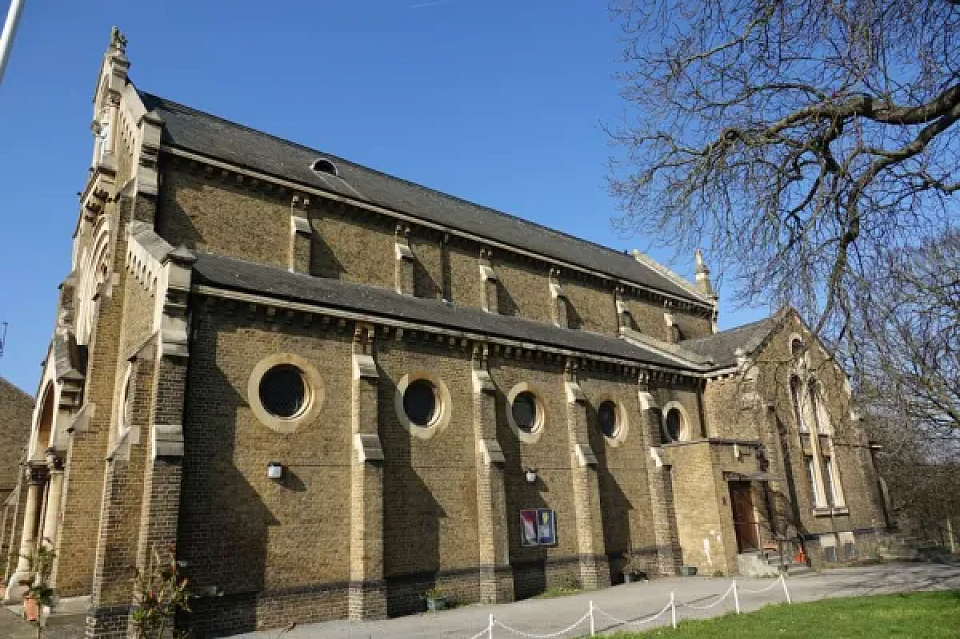
For the architectural history of the church, Highcombe House, and the precinct — including the Heritage Statement and Conservation Plan prepared by the University of Kent — visit the Trust's website.